
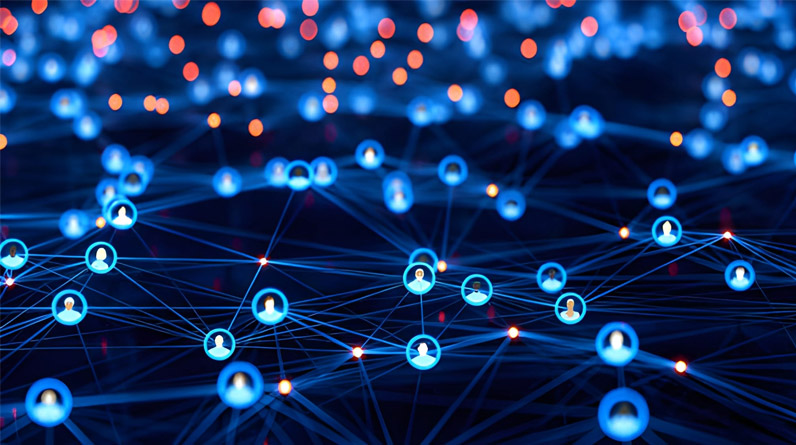
There’s something deeply human about wanting to belong. For thousands of years, that sense of belonging came from the people we could touch, see, and gather with around a fire. But walk into any coffee shop today, and you’ll see something fascinating: people sitting alone, yet deeply connected to communities scattered across continents. They’re laughing at inside jokes with people they’ve never met in person, finding support from strangers who understand their struggles better than their neighbors, and building identities shaped as much by their Discord servers as their zip codes.
The internet hasn’t just given us new places to connect. It’s fundamentally rewriting what belonging means, who we belong with, and how we find our people in the first place.
The Quiet Revolution in How We Connect
Traditional belonging was geography-bound and often circumstantial. You belonged to your neighborhood, your church, your local club, or the people who happened to share your workplace. These connections mattered, but they came with limitations. What if your small town had nobody who shared your passion for Renaissance literature? What if you were the only person in your circle navigating a rare medical condition? What if your identity didn’t quite fit the boxes your immediate community offered?
Online communities changed the game by making belonging less about proximity and more about affinity. According to a 2023 Pew Research Center study, 58% of Americans now say they’ve found meaningful connections through online groups that they couldn’t find in their physical communities. That’s not a small shift. That’s a fundamental transformation in how humans organize themselves socially.
What makes this particularly interesting is that these digital spaces aren’t replacing physical communities as much as they’re filling gaps that physical geography simply couldn’t address. Someone might have strong local friendships but find their deepest discussions about mental health happen in a carefully moderated Reddit community. A parent might love their neighborhood playgroup but get their most practical advice from a Facebook group of 10,000 other parents facing similar challenges.
Why Digital Communities Feel Different
There’s a unique quality to belonging in online spaces that’s hard to replicate offline. When you join a subreddit about woodworking, you’re not just entering a space where people talk about woodworking. You’re joining a culture with its own language, values, inside jokes, and unwritten rules. The community develops a personality that feels distinct and real, even though it exists primarily as text and images on screens.
Part of this comes from self-selection. In physical communities, you’re often thrown together with people by chance or necessity. Online, you actively choose your communities based on shared interests, values, or experiences. This creates a different kind of bond. When someone in your niche Discord server shares an achievement, the celebration feels authentic because everyone there genuinely cares about that specific thing.
The Vulnerability Factor
Surprisingly, many people find it easier to be vulnerable online than in person. There’s something about the slight remove of a screen that can make difficult conversations feel safer. A teenager struggling with anxiety might never bring it up at school but finds support in a mental health forum. Someone questioning their faith might not feel comfortable discussing doubts with their congregation but finds thoughtful dialogue in an online discussion group.
This isn’t about hiding or being fake. It’s about finding the right audience for different parts of ourselves. We’re complex beings, and different communities let us explore different facets of our identity without judgment.
The Always-On Connection
Physical communities have operating hours. Your book club meets Tuesday nights. Your gym buddies are there in the mornings. But online communities never close. Having a crisis at 3 AM? There’s probably someone awake in your online support group. Excited about something at an odd hour? Your gaming community is online and ready to celebrate with you.
This constant availability creates a different relationship with belonging. It’s not about scheduled interactions but ongoing presence. You might not actively participate every day, but knowing your community is there, whenever you need it, creates a persistent sense of connection.
The Identity Laboratory
One of the most profound ways online communities are redefining belonging is by giving people space to explore and experiment with identity. In physical spaces, we often feel locked into roles: the responsible parent, the professional colleague, the dutiful family member. Online communities offer what psychologists call “identity laboratories” where people can try on different versions of themselves.
A corporate accountant might be a respected moderator in an anime community, valued not for their day job but for their deep knowledge and fair judgment. A shy teenager might discover they’re a natural leader when organizing events in their gaming guild. These roles aren’t fake or lesser than their “real” identities. They’re genuine expressions of parts of themselves that don’t get much room elsewhere.
Research from the Oxford Internet Institute in 2024 found that 67% of active online community members reported feeling they could express aspects of their personality in digital spaces that they struggled to show in physical settings. That’s significant. It suggests that for many people, online communities aren’t providing an escape from authentic self-expression but rather enabling it.
When Strangers Become Family
Walk into any tight-knit online community, and you’ll find stories that sound almost unbelievable. A person whose online gaming friends pooled money to help them through a medical emergency. A knitting community that sent handmade blankets to a member going through cancer treatment. A writing forum where members attended a fellow writer’s funeral after meeting them only through shared words on screens.
These aren’t isolated feel-good stories. They’re increasingly common examples of how digital belonging can translate into real support. The boundaries between “online” and “real” relationships have blurred to the point where the distinction often feels meaningless. If someone provides emotional support during your darkest moments, does it matter that you’ve never shaken their hand?
The Shared Experience Bond
What makes online communities particularly powerful is their ability to connect people through shared experiences that might be rare or stigmatized in physical spaces. Someone dealing with a rare chronic illness might be the only person in their town with that condition, but online they can find hundreds or thousands of others who truly understand. A person from a marginalized background might feel isolated locally but find a thriving community online where their identity is normal and celebrated.
This creates a specific kind of belonging that’s hard to achieve otherwise. It’s not just about having people around; it’s about having the right people, those who get it without explanation, who speak your language, and who validate your experience simply by existing alongside you.
The Challenges of Digital Belonging
Of course, this reimagining of belonging isn’t without its complications. Online communities can become echo chambers where beliefs get reinforced without challenge. They can foster “us versus them” mentalities that make members defensive or hostile to outsiders. And yes, they can sometimes replace physical connection in ways that leave people feeling isolated despite being digitally connected.
The anonymity that makes vulnerability easier can also enable toxic behavior. Without face-to-face accountability, some people say things online they’d never say in person. Communities can develop cultures that are welcoming to insiders but hostile to newcomers or anyone who doesn’t fit the established norms perfectly.
The Authenticity Question
There’s also an ongoing debate about whether online belonging is as “real” as physical connection. Can you truly know someone you’ve never met in person? Is a friendship conducted entirely through text messages and voice chats as meaningful as one built over shared meals and hugs?
The answer seems to be: it depends, and maybe we’re asking the wrong question. Different relationships serve different purposes. Your online community might provide better support for a specific challenge, while your physical friends offer different kinds of connection. Rather than ranking these, we’re learning to appreciate the distinct value each brings.
Building Better Digital Spaces
As online communities continue to evolve, we’re learning what makes some spaces feel genuinely welcoming while others become toxic or superficial. The healthiest communities share certain characteristics. They have clear values and boundaries. They cultivate cultures of respect even during disagreement. They balance openness to newcomers with protection of the community’s core identity.
Good moderation makes an enormous difference. The best online communities aren’t free-for-alls but carefully tended gardens where moderators work to maintain the environment that allows belonging to flourish. They remove bad actors, yes, but more importantly, they model and encourage the behaviors that make people feel safe, valued, and heard.
The Role of Rituals and Traditions
Interestingly, successful online communities often develop rituals that mirror those in physical spaces. Weekly discussion threads, annual events, inside jokes that become traditions, ways of celebrating member milestones. These rituals create continuity and shared history, transforming a collection of individuals into something that feels like a real community with its own culture.
A gaming community might have a tradition of sharing screenshots every “Screenshot Saturday.” A parenting forum might have weekly threads where members share their wins and struggles. These predictable touchpoints create rhythm and reliability, making the digital space feel more like home.
The Hybrid Future of Belonging
Where does this leave us? Probably not in a future where everyone abandons physical community for digital spaces, but rather in a world where belonging becomes more layered and diverse. Most people will likely maintain multiple communities serving different needs: the neighbors they chat with, the work colleagues they collaborate with, the online groups where they explore specific interests, the digital spaces where they find support for particular challenges.
This isn’t fragmenting our sense of belonging so much as enriching it. We’re not replacing one form of connection with another but adding new dimensions to how humans find their people. The teenager who feels alone at school but thrives in an online art community isn’t choosing between identities. They’re discovering that belonging doesn’t have to be singular or simple.
The key seems to be intentionality. Online communities work best when we approach them thoughtfully, choosing spaces aligned with our values, contributing meaningfully rather than just consuming, and maintaining awareness of how our digital connections complement rather than replace physical ones.
What This Means for All of Us
Understanding how online communities are redefining belonging matters because it changes how we think about human connection itself. It expands our options for finding our people. It suggests that feeling like an outsider in your immediate surroundings doesn’t mean you’re destined for loneliness. It means the community you need might just be forming right now, in a corner of the internet you haven’t discovered yet.
This shift also carries responsibility. As we build and participate in online communities, we’re not just chatting or sharing memes. We’re creating the spaces where people will form meaningful relationships, find support during hard times, and develop aspects of their identity. That’s serious work, even when it happens through keyboards and screens.
For parents, educators, and anyone working with younger generations, recognizing the legitimacy of online belonging changes how we support people’s social development. Instead of dismissing digital connections as “not real,” we can help people navigate these spaces safely while honoring the genuine relationships they’re building there.
Finding Your Digital Home
If you’re looking to find deeper belonging in online spaces, start by getting specific about what you’re seeking. Are you looking for people who share a hobby? A support group for a specific challenge? A place to explore ideas or identities? Different communities serve different purposes, and clarity helps you find the right fit.
Don’t expect instant connection. Just like physical communities, digital ones take time. Lurk for a while to understand the culture. Contribute thoughtfully. Show up consistently. Real belonging rarely happens overnight, regardless of whether it’s forming online or in person.
And remember that it’s okay to outgrow communities or realize a space isn’t right for you. Online belonging is flexible. The community that serves you perfectly at one stage of life might not fit your needs later, and that’s normal and healthy.
The Bottom Line
Online communities aren’t destroying traditional notions of belonging. They’re expanding them, complicating them in ways that ultimately give us more options for finding connection. Yes, there are risks and downsides, but there’s also something profoundly hopeful about a world where the weird kid in a small town can find their people, where someone facing a rare challenge can connect with others who understand, where our need to belong isn’t limited by geography or circumstance.
We’re living through a fundamental shift in human social organization, one that’s happening so gradually that we might not fully appreciate its significance until we look back years from now. The lonely teenager finding acceptance in an online community, the parent getting support from strangers across the globe, the hobbyist connecting with fellow enthusiasts they’d never meet otherwise—these aren’t edge cases anymore. They’re becoming standard parts of how humans find where they belong.
The question isn’t whether online communities are redefining belonging. They already are. The real question is how we’ll shape these spaces to bring out the best in human connection while guarding against the worst. Because at the end of the day, whether it happens around a fire or through a screen, belonging remains one of our deepest needs. We’re just getting better at finding more ways to fulfill it.
🎬 That’s a wrap! Dive into more fresh content and join the vibe at SimpCity.