
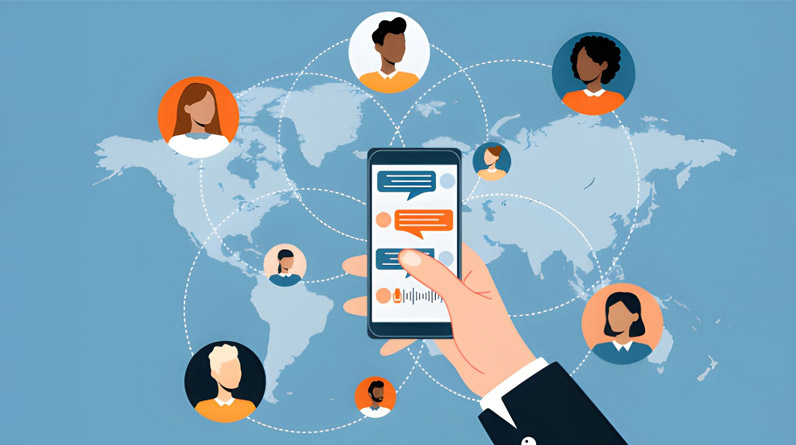
We’ve all seen it. That friend who posts every detail of their relationship drama. The colleague who live-tweets their medical procedures. The acquaintance who turns Instagram into a daily therapy session. Your first instinct might be to cringe, scroll past, or wonder why they can’t just keep some things private.
But here’s the thing: oversharing online isn’t always the digital disaster we make it out to be. Yes, there are risks. Yes, boundaries matter. But the conversation around oversharing has become so one-sided that we’ve forgotten something important—sometimes, being open online serves a real purpose. Sometimes, what looks like “too much information” to one person is genuine connection to another.
According to a 2024 study by Secure Data Recovery, 89% of people believe others share too much on social media. That’s nearly everyone pointing fingers at everyone else, which raises an interesting question: if we all think everyone else overshares, are we using the right measuring stick? Understanding why people share what they share—and when it crosses from authentic to excessive—requires looking beyond simple judgments.
What Actually Counts as Oversharing?
Before we dive into the why, let’s get clear on the what. Oversharing isn’t just about posting frequently or being enthusiastic about your life. It’s more nuanced than that.
True oversharing typically involves revealing information that makes others uncomfortable, puts your safety at risk, violates someone else’s privacy, or serves no real purpose beyond seeking validation. It’s the difference between posting “Excited about my job interview tomorrow!” and “Here’s my interviewer’s name, the company’s confidential project I’ll be working on, and my social security number for good measure.”
The context matters enormously. Sharing your mental health journey with a supportive community might be deeply meaningful and helpful. Posting the same content to your professional network where your boss and clients follow you might be a different story. What counts as oversharing on LinkedIn looks nothing like oversharing on a private Discord server with close friends.
The Blurry Line Between Authentic and Excessive
Most oversharing exists in a gray area. Someone posting about their divorce might be processing grief publicly, seeking support, or building connection with others who’ve been through it. Another person might view the same content as attention-seeking or inappropriate. Neither perspective is completely wrong—they’re just viewing sharing through different lenses shaped by their own comfort levels, experiences, and values.
This is where the conversation gets interesting. We tend to judge oversharing based on our personal boundaries, but those boundaries vary wildly. What feels vulnerable and brave to you might feel like a boundary violation to someone who values privacy more intensely. Neither approach is inherently better.
Why We Share So Much: The Psychology Behind It
People don’t overshare because they’re careless or attention-starved—well, not usually. The motivations run deeper than that, and understanding them helps us have more empathy both for others and for our own online behavior.
The Need for Connection and Validation
Humans are wired for connection. Before social media, we shared our lives through phone calls, letters, neighborhood conversations, and family gatherings. Digital platforms simply changed the venue, not the fundamental human need to be seen and understood.
When someone shares a vulnerable moment online and receives supportive responses, their brain releases oxytocin—the same bonding hormone released during physical touch. That positive feedback loop can be powerful, especially for people who feel isolated in their offline lives. Research from 2024 found that anxiety, attention-seeking behaviors, and social media habits are significantly linked to increased online sharing, particularly among younger users.
This isn’t necessarily pathological. Sometimes people genuinely need support that their immediate circle can’t or won’t provide. An online community of people who’ve experienced similar challenges can offer understanding that even close friends might not be able to give.
Processing and Making Sense of Experience
Writing things out helps us process them. Plenty of people use social media the way previous generations used diaries—as a tool for working through thoughts and emotions. The difference is that modern processing happens in public, creating a record that others can witness and respond to.
When you’re going through something difficult, putting it into words can bring clarity. Sharing it can add another layer of processing—seeing how others react, receiving different perspectives, and feeling less alone in your struggle. For many people, this public processing isn’t about seeking attention; it’s about making sense of their inner world by articulating it externally.
Building Identity and Authenticity
Social media has become a primary space where people construct and present their identity, especially for younger generations who grew up online. Sharing personal details, opinions, and experiences is how many people signal who they are, what they value, and what communities they belong to.
The pressure to be “authentic” online adds another layer. We’re simultaneously told to curate perfect images and to “keep it real.” This contradiction pushes some people toward more revealing content as a way to prove they’re genuine, not fake or filtered. The result can look like oversharing, but it’s often an attempt to resist the superficiality they see elsewhere on social platforms.
The Real Risks (But Not What You Think)
Let’s be clear: oversharing does carry risks. Identity theft, stalking, professional consequences, and damaged relationships are all genuine concerns. According to Tessian, a cybersecurity company, roughly four in five people overshare personal data on social media, with a significant portion posting enough information to enable security threats.
But here’s what’s interesting—the risks we obsess over aren’t always the ones that actually materialize. Most people won’t experience identity theft because they posted a vacation photo. The more common consequences are subtler and more social than criminal.
The Social Costs
The biggest risk of oversharing isn’t usually about strangers stealing your information. It’s about how your sharing affects your relationships and reputation. Posting constant complaints can make people less likely to engage with you. Sharing intimate relationship details can create awkwardness with mutual friends. Revealing too much about your personal struggles in professional spaces can impact how colleagues perceive your capabilities.
These social consequences are harder to quantify than identity theft, but they’re often more impactful on daily life. The person who lost a job opportunity because their social media presence seemed unprofessional faces real consequences, even though no crime was committed.
The Emotional Aftermath
Sometimes the worst consequence of oversharing is how you feel about it later. That vulnerable post that seemed right in the moment might feel mortifying in the morning. The vent session about your relationship that got more attention than you expected might leave you feeling exposed and regretful.
This emotional hangover is real, and it’s worth considering before you hit “post.” Not because shame is appropriate, but because protecting your future self from regret is an act of self-care. The internet might not be forever, but screenshots often are.
When Oversharing Actually Works
Now here’s the counterintuitive part: sometimes oversharing is exactly the right move. Despite all the warnings about privacy and professionalism, being openly vulnerable online can create genuinely positive outcomes.
Building Real Community
Some of the strongest online communities exist because people were willing to share beyond conventional comfort zones. Parent groups where people admit to struggling. Mental health communities where people describe their actual symptoms, not sanitized versions. Chronic illness networks where people share the unglamorous reality of their conditions.
These spaces thrive on what others might call oversharing. The willingness to be detailed and honest creates trust and connection that surface-level posting never could. When someone shares something vulnerable and specific, it gives others permission to do the same. That’s how supportive communities form.
Breaking Stigma and Creating Change
Many social movements have gained traction because individuals were willing to share personal stories that others deemed “too much.” The #MeToo movement worked because people shared their experiences publicly. Mental health stigma has decreased partly because people talk openly about their struggles. Medical conditions gain research funding when patients make their experiences visible.
What looks like oversharing can be advocacy. It can be education. It can be the beginning of social change. Sometimes putting your story out there—even when it makes others uncomfortable—serves a purpose larger than any individual post.
Professional Authenticity
In some fields and for some personal brands, sharing more rather than less has become a strategic advantage. Entrepreneurs who share their failures alongside successes often build more loyal followings. Content creators who reveal their processes and struggles tend to attract more engaged audiences. Professionals who post about their real experiences rather than polished highlights frequently develop stronger networks.
The key difference is intentionality. These people aren’t accidentally oversharing—they’re making deliberate choices about transparency as part of their professional presence. They’re aware of the risks and have decided the potential benefits outweigh them.
The Generational Divide in Digital Sharing
If you’ve noticed that different age groups have wildly different ideas about what counts as oversharing, you’re not imagining it. Generational attitudes toward privacy and sharing have shifted dramatically, and understanding these differences helps explain why the same post might seem perfectly normal to one person and shockingly inappropriate to another.
Older generations often grew up with the idea that privacy is the default, and sharing is the exception. You kept personal matters within your family or close friend circle. Younger generations, particularly those who came of age with social media, often approach it differently—sharing is the default, and privacy is something you opt into when needed.
Interestingly, data from Pew Research in 2025 shows that 77% of Gen Z users actively employ privacy tools like limiting story viewers and hiding likes, suggesting a more sophisticated approach to selective sharing rather than indiscriminate openness. This generation isn’t necessarily sharing everything with everyone—they’re making calculated choices about audience and context in ways that earlier social media users didn’t.
The generational divide isn’t just about how much people share, but about what they consider private in the first place. A Gen X professional might see no problem discussing their salary with close friends but would never post about relationship problems. A Gen Z creator might do exactly the opposite. Neither approach is wrong—they’re simply products of different cultural contexts around privacy.
Finding Your Own Balance
So where does this leave you? If oversharing isn’t always bad and privacy isn’t always necessary, how do you figure out what’s right for your own online presence?
The answer is frustratingly individual. What works depends on your personality, your goals, your audience, and your comfort level with potential consequences. But there are some useful questions you can ask yourself before sharing something that feels like it might be pushing boundaries.
The Future Self Test
Will you be okay with this post existing in six months? A year? Five years? This isn’t about shame—it’s about considering whether you’re comfortable with this being part of your digital history. If you’re posting in an emotional moment, give it the overnight test. Draft it, sit on it, and see if it still feels right when you’re calmer.
The Audience Check
Who will see this, and how might they interpret it? Your close friends might understand the context of a frustrated post about your workplace, but what about that recruiter who follows you? Your mental health community might appreciate vulnerable details, but how will your extended family react? Sometimes the same content is perfect for one platform and problematic for another.
The Purpose Question
Why are you sharing this? If the answer is genuine connection, processing, advocacy, or building community, that’s different from seeking validation, passive-aggressive communication, or impulse posting. Understanding your own motivations helps you share more intentionally rather than reactively.
The Reciprocity Principle
Would you want someone to share this level of detail about you? This is particularly important when your posts involve other people. Your relationship drama is your story, but it’s also your partner’s story. Your parenting challenges involve your kids’ privacy. Being mindful of where your story ends and someone else’s begins is a crucial skill for online sharing.
The Verdict: Context Is Everything
Oversharing isn’t a simple problem with a simple solution. It exists in a complex web of personal boundaries, cultural norms, platform expectations, and individual needs. What looks like too much information in one context might be exactly the right amount in another.
The goal isn’t to stop sharing or to share everything—it’s to share intentionally. To understand why you’re posting what you’re posting and to be aware of the potential consequences, both positive and negative. To recognize that your comfort level with vulnerability might be different from others’, and that’s okay.
Here’s what matters more than any hard rule about oversharing: Are you sharing in a way that feels authentic to you? Are you respecting others’ privacy while expressing yourself? Are you creating the kind of online presence you actually want, rather than the one you think you should have?
If the answer to those questions is yes, then maybe you’re not oversharing at all. Maybe you’re just sharing in a way that doesn’t work for everyone—and that’s perfectly fine. The internet is big enough for different approaches to personal disclosure. What matters is that you’re making conscious choices rather than impulsive ones, and that you’re willing to adjust your approach as you learn more about what works for you.
So the next time you see someone posting what you’d consider too much information, pause before judging. They might be building community you don’t see, processing an experience you haven’t had, or simply existing in a different cultural context around privacy than you do. And the next time you’re debating whether to share something personal, remember that vulnerability can be powerful—you just need to wield it wisely.
At the end of the day, oversharing isn’t about the volume of what you post. It’s about the intention behind it and the impact it creates. Share thoughtfully, respect boundaries—both yours and others’—and remember that the “right” amount of sharing will look different for everyone. That’s not a bug in the social media system; it’s a feature of being human in a digital age.
🎬 That’s a wrap! Dive into more fresh content and join the vibe at SimpCity.