
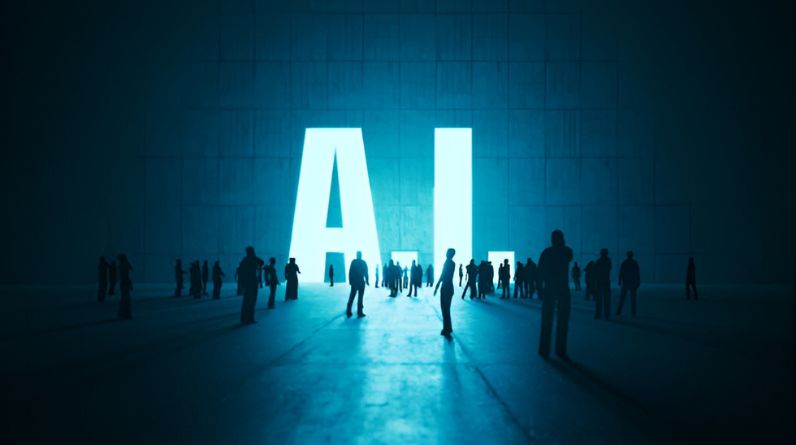
The digital landscape is experiencing a seismic shift. As we navigate through 2025, artificial intelligence has emerged as the defining force reshaping how we connect, collaborate, and build communities online. With 78% of organizations now using AI (McKinsey, 2025) and ChatGPT alone attracting 700 million weekly active users (Planable, 2025), we’re witnessing the dawn of a new era where technology doesn’t just facilitate human connection—it fundamentally transforms it.
Online communities have always been the heartbeat of the internet, but AI is rewriting the rules. From Discord servers powered by intelligent bots to Reddit communities enhanced by automated moderation, the marriage of artificial intelligence and digital gathering spaces is creating experiences that were unimaginable just a few years ago. This isn’t science fiction—it’s happening right now, and the implications reach far beyond simple automation.
The AI Revolution: Numbers That Tell the Story
Let’s start with the raw data that reveals the magnitude of this transformation. The AI market is projected to reach $243.7 billion in 2025, growing at a compound annual growth rate of 27.67% through 2030 (Founders Forum Group, 2025). But these aren’t just abstract numbers—they represent real change in how communities function.
Consider this: 30 million Discord users had interacted with AI apps by early 2024, and approximately 28% of all server messages are now bot-generated (CommunityOne, 2025). Meanwhile, AI content moderation has evolved from a nice-to-have feature into critical infrastructure, with the market expanding from $1.03 billion in 2024 to a projected $2.59 billion by 2029 (Vertu, 2025).
Perhaps most telling is the democratization of AI access. According to OpenAI’s 2025 study, the gender gap in ChatGPT usage has narrowed dramatically—from 37% typically feminine names in January 2024 to 52% by mid-2025. This isn’t just about technology adoption; it’s about AI becoming accessible to everyone, fundamentally changing who participates in digital communities and how.
AI-Powered Moderation: The New Guardians of Digital Spaces
If you’ve participated in any online community recently, you’ve likely encountered AI moderation without even realizing it. These systems have evolved far beyond simple keyword filters into sophisticated guardians that analyze context, detect nuance, and maintain safe spaces at scales impossible for human moderators alone.
How Modern AI Moderation Works
Today’s AI moderation employs a hybrid approach that combines machine learning’s speed with human judgment’s wisdom. Platforms like Bluesky applied 5.5 million labels in 2024, achieving 99.90% accuracy in their automated content assessment (Bluesky, 2025). These systems don’t just scan for profanity—they understand sentiment, identify hate speech hidden in coded language, and even detect mental health concerns that might require intervention.
The technology operates on multiple levels simultaneously. Natural language processing analyzes text for toxicity, computer vision scans images and videos for harmful content, and behavioral algorithms identify problematic patterns before they escalate. As one community moderator at Mattermost discovered when implementing AI assistance, these tools can transform moderation from reactive firefighting into proactive community stewardship.
Real-World Impact
The results speak for themselves. Meta implemented Community Notes in March 2025, leveraging X’s open-source technology for context on potentially misleading content (Hanga Technologies, 2025). Meanwhile, platforms like Sendbird report that their AI moderation tools reduce manual review workload by over 60%, allowing human moderators to focus on complex edge cases requiring empathy and cultural understanding.
But it’s not just about efficiency. Princeton University’s research on content moderation concludes: “Without AI, moderation is impossible. With AI alone, it is unreliable.” The sweet spot lies in thoughtfully designed hybrid systems that leverage AI’s scalability while preserving human judgment for nuance and appeals.
Discord, Reddit, and the Platform Evolution
Community platforms are racing to integrate AI in ways that feel natural rather than intrusive. Discord, with its massive user base, has become a laboratory for AI innovation. The platform now hosts hundreds of AI-focused servers, from OpenAI’s official community to specialized learning hubs like “Learn AI Together.”
The Bot Revolution
Discord’s AI bot ecosystem has exploded. Tools like CommunityOne offer all-in-one solutions for community engagement and growth, while specialized bots handle everything from automated support to content creation. Midjourney’s Discord server alone boasts over 20 million members (CommunityOne, 2025), demonstrating how AI tools can become the centerpiece of thriving communities rather than just support features.
What makes these bots powerful isn’t just their functionality—it’s their integration into community workflows. Wallu, a specialized AI support bot, works alongside existing ticket systems rather than replacing them. This philosophy of augmentation over replacement is becoming the standard across successful community platforms.
Reddit’s Community-First Approach
Reddit has taken a different path, empowering users to flag potentially problematic content while using AI to surface quality discussions. This distributed moderation model, combined with AI assistance, creates a system where community standards evolve organically while maintaining safety and relevance.
Personalization at Scale: The AI Advantage
Remember when Netflix recommendations felt like magic? That same technology is now transforming online communities. AI algorithms analyze user preferences, participation patterns, and interests to create personalized community experiences that keep members engaged.
According to Menlo Ventures’ 2025 research, 18% of people using technology to stay connected have used AI for tasks like starting conversations or finding groups, with adoption even higher for dating (31%) and virtual friendships (26%). These aren’t just statistics—they represent real people finding meaningful connections through AI-assisted discovery.
Platforms implementing personalized recommendations report significant upticks in engagement. When users discover content and connections that genuinely match their interests, they’re more likely to participate actively. This creates a virtuous cycle where increased engagement generates better data, leading to even more refined personalization.
The Virtual Frontier: Communities Beyond Screens
The next evolution of online communities won’t happen on traditional screens—it’s unfolding in virtual and augmented reality spaces powered by AI. The metaverse, often dismissed as hype, is quietly maturing into a functional platform with projected market value approaching $1 trillion by 2030 (Metaverse Planet, 2025).
Immersive Community Spaces
Meta’s Horizon Worlds has expanded to mobile, while Quest 3S headsets are bringing mixed reality to mainstream audiences. These aren’t isolated gaming experiences—they’re persistent social spaces where communities gather, create, and collaborate in three dimensions.
AI serves as the central nervous system of these virtual worlds. It generates dynamic environments, powers realistic non-player characters that learn from user behavior, and enables natural language interactions that make virtual spaces feel genuinely social. Roblox, with over 200 million monthly users, demonstrates how AI-driven personalization can boost player engagement by up to 30% (AI News Hub, 2025).
Breaking Down Barriers
Perhaps the most transformative aspect of AI in virtual communities is its ability to eliminate traditional barriers. Real-time translation enables seamless global communication. Accessibility features powered by AI allow users with disabilities to participate fully. And procedural content generation creates vast, unique environments without requiring massive development teams.
Challenges on the Horizon
This transformation isn’t without complications. Privacy concerns loom large, with 70% of users worried about data tracking and security breaches in AI-powered platforms (AI News Hub, 2025). The “online disinhibition effect” that causes people to behave differently in digital spaces becomes more pronounced in immersive virtual environments, raising questions about harassment and safety.
There’s also the risk of deepening digital divides. High-end VR hardware and powerful internet connections aren’t universally accessible, potentially creating a new class of “metaverse haves and have-nots.” Algorithmic bias remains a persistent challenge—AI systems trained on biased data can perpetuate real-world inequalities in digital spaces.
But perhaps the most nuanced challenge is maintaining the human element. As one community manager noted, AI should enhance human connection, not replace it. The platforms that succeed will be those that use AI to empower community members rather than automate them away.
Enterprise Communities and Professional Networks
While gaming and social communities grab headlines, AI is quietly revolutionizing professional networking and enterprise collaboration. 92% of Fortune 500 companies now use OpenAI’s platform (Planable, 2025), often for internal community building and knowledge sharing.
Companies are discovering that AI-powered community platforms can slash training costs and boost efficiency. NVIDIA’s Omniverse platform facilitates virtual simulations that save enterprises millions in real-world setup expenses. Meanwhile, AI assistants in platforms like Slack and Microsoft Teams are transforming how professional communities share knowledge and collaborate across time zones.
The Creator Economy and AI Communities
Content creators are leveraging AI to build more engaged communities around their work. Tools for automated content creation, sentiment analysis, and audience insights are democratizing community management—you no longer need a large team to maintain a thriving online community.
68% of businesses using AI tools report increased content marketing ROI (Synthesia, 2024), and much of this success comes from better community engagement. AI helps creators understand what their audience wants, when they’re most active, and how to structure content for maximum impact.
Looking Ahead: 2025-2030
The trajectory is clear: AI will become increasingly integrated into the fabric of online communities. By 2026, Gartner predicts that one quarter of the population will spend at least one hour daily in metaverse environments. Cross-platform AI assistants will remember our preferences across different communities, creating seamless experiences as we move between digital spaces.
We’re also likely to see the emergence of truly autonomous AI community members—not just bots following scripts, but entities capable of meaningful participation and contribution. The line between human and AI community members may blur in ways that challenge our assumptions about digital interaction.
The future will also bring more sophisticated governance models. Distributed autonomous organizations (DAOs) powered by AI will enable communities to make collective decisions at scale, potentially revolutionizing how online groups organize and evolve.
Conclusion: Embracing the Human-AI Partnership
The future of online communities in the AI era isn’t about machines replacing humans—it’s about augmentation, enhancement, and new possibilities for connection. We’re witnessing the emergence of digital spaces that are safer, more accessible, and more engaging than ever before, powered by AI systems that handle the heavy lifting while preserving the human element that makes communities meaningful.
Success in this new landscape requires balance. Communities that thrive will leverage AI for moderation, personalization, and scalability while maintaining authentic human connections at their core. They’ll use technology to break down barriers rather than erect new ones, and they’ll remain vigilant about privacy, safety, and inclusivity.
As we stand at this technological crossroads, one thing is certain: the communities we build today will shape the digital world of tomorrow. With AI investment reaching $107 billion globally in 2025 (Founders Forum Group, 2025) and adoption accelerating across all demographics, we have both an opportunity and a responsibility to ensure these technologies serve human connection rather than replace it.
The future is being written right now, in Discord servers and Reddit threads, in virtual worlds and AI-moderated forums. And while the technology is remarkable, the real magic happens when people come together—whether that’s through text on a screen or avatars in a virtual space. AI is simply the newest tool in humanity’s ancient quest to connect, collaborate, and create communities that matter.
The question isn’t whether AI will transform online communities—it already has. The question is: how will we shape this transformation to reflect our values and serve our collective future?
🎬 That’s a wrap! Dive into more fresh content and join the vibe at SimpCity.