
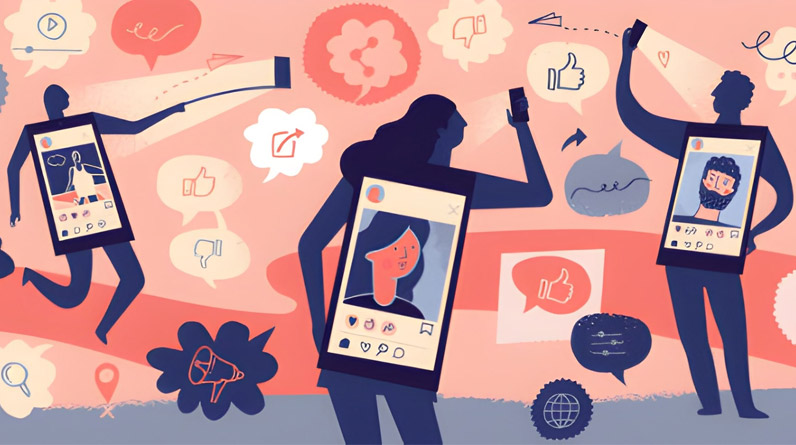
The notification pings. Your heart skips slightly. Someone liked your post. Then another. And another. You feel a small rush of satisfaction, maybe even pride. But what happens when those likes don’t come? When your carefully curated photo sits in digital silence, receiving fewer reactions than expected?
Welcome to the world of validation addiction, where our self-worth has become dangerously intertwined with double-taps, hearts, and thumbs-up icons. We’re living in an era where digital approval has transformed from a nice bonus into a psychological necessity for millions worldwide.
The Science Behind Our Need for Likes
Our brains weren’t designed for social media, yet they’ve adapted remarkably well to its reward systems. When you receive a like, comment, or share, your brain releases dopamine—the same neurotransmitter associated with eating, sex, and other pleasurable activities. Research from UCLA’s Brain Mapping Center has shown that the same regions of the brain activated by eating chocolate or winning money light up when teenagers see their photos receiving likes.
This isn’t coincidental. Social media platforms employ teams of engineers and psychologists who understand behavioral psychology intimately. They’ve created systems that exploit our fundamental human need for social acceptance, turning it into an addictive loop that keeps us scrolling, posting, and checking our phones hundreds of times per day.
How “Like” Culture Rewired Our Relationships
The introduction of the “like” button in 2009 fundamentally changed how we communicate online. What started as a simple way to acknowledge content quickly evolved into a complex social currency that dictates visibility, popularity, and perceived worth.
The Numbers Game
We’ve reduced human interaction to quantifiable metrics. Instead of meaningful conversations, we now measure our social success in followers, likes, and engagement rates. A study published in the Journal of Social and Clinical Psychology found that limiting social media use to approximately 30 minutes per day led to significant reductions in loneliness and depression, suggesting that our constant engagement with these platforms may be harming rather than helping our wellbeing.
Young people are particularly vulnerable. Adolescents report checking their phones an average of over 100 times daily, with many admitting they feel anxious when separated from their devices. This isn’t just habit—it’s dependency driven by the fear of missing out on social validation.
The Comparison Trap
Like culture has intensified social comparison to unprecedented levels. We’re no longer comparing ourselves to our immediate circle or even our community. We’re measuring our lives against carefully curated highlight reels of thousands of people worldwide. When your vacation photo gets 50 likes but an influencer’s similar post receives 50,000, it’s hard not to internalize those numbers as a reflection of your worth.
The Dark Side of Digital Validation
The consequences of validation addiction extend far beyond bruised egos. Mental health professionals have observed troubling patterns emerging from our obsession with online approval.
Anxiety and Depression
There’s mounting evidence connecting heavy social media use with increased rates of anxiety and depression, particularly among teenagers and young adults. The constant feedback loop creates a volatile sense of self-worth that fluctuates with every notification—or lack thereof. Former Facebook executive Sean Parker admitted that the platform was designed to exploit human psychology, creating a “social-validation feedback loop” that he described as “exactly the kind of thing that a hacker like myself would come up with.”
Authentic Connection Suffers
Perhaps most ironically, our pursuit of digital validation often comes at the expense of genuine connection. We’re so busy documenting experiences for social media consumption that we’re not fully present in those moments. Conversations get interrupted to capture the perfect Instagram story. Dinners are delayed while everyone photographs their food. Real intimacy takes a backseat to maintaining our online personas.
Why We Can’t Just Stop
If social media makes us miserable, why don’t we simply log off? The answer lies in how deeply these platforms have embedded themselves into modern social infrastructure. For many, particularly younger generations, social media isn’t supplementary to their social lives—it is their social life.
Additionally, the fear of becoming invisible drives continued participation. In our hyper-connected world, not being on social media can feel like social suicide. We worry about missing invitations, losing touch with friends, or becoming irrelevant. This creates a compulsion to stay engaged even when we recognize the negative impacts.
Breaking Free From Validation Addiction
Recognizing the problem is the first step toward healthier digital habits. Here are practical strategies to reduce dependence on external validation:
Audit Your Usage
Use built-in screen time trackers to understand how much time you’re actually spending on social media. Most people significantly underestimate their usage. Seeing concrete numbers can be a powerful motivator for change.
Turn Off Notifications
Those little red bubbles and pings are specifically designed to trigger compulsive checking. Disabling notifications removes the immediate feedback loop and helps break the addiction cycle.
Practice Mindful Posting
Before sharing something, ask yourself: Am I posting this because I genuinely want to share it, or am I seeking validation? There’s nothing wrong with wanting approval, but recognizing that motivation helps create healthier boundaries.
Cultivate Offline Validation
Invest in relationships and activities that provide meaning independent of digital metrics. Hobbies, face-to-face friendships, volunteer work, and personal achievements offer validation that’s deeper and more sustainable than any number of likes.
The Path Forward
We’re unlikely to abandon social media entirely, nor should we necessarily. These platforms offer genuine benefits for connection, creativity, and community building. The key is developing a healthier relationship with them—one where we use social media rather than letting it use us.
Understanding that likes are algorithmic feedback, not accurate measures of worth, is crucial. Your value as a human being exists independent of engagement metrics. The sooner we internalize this truth, the sooner we can reclaim our self-esteem from the hands of technology companies that profit from our insecurity.
As we navigate this digital landscape, perhaps the most radical act of rebellion isn’t posting or not posting—it’s refusing to let those little hearts determine how we feel about ourselves. Real validation comes from within, from the people who know us fully, and from living according to our values rather than chasing numbers on a screen.
The question isn’t whether we’re addicted to validation—many of us clearly are. The question is: what are we going to do about it?
🎬 That’s a wrap! Dive into more fresh content and join the vibe at SimpCity.